



 | Clear Evidence for God in Creation | The Atom |  |
The Eye
Posted on: 03 May 2024 by Andrew Perry
Posted in: [Creation]
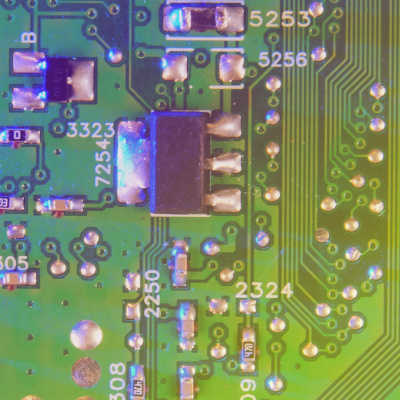
(Advanced camera technology)
A modern TV or computer display running at HD (high definition) resolution creates an image from a set of nearly 8.3 million pixels (tiny dots), each one of which contains red, green and blue light in varying intensities to create the required colour. (N.B. Red, green and blue are the standard primary colours when mixing light, as opposed to the red, yellow and blue recognised by an artist.) The number of possible colours that can be created by a standard TV or monitor is just under 16.8 million. This goes to show how far technology has advanced, even since my own childhood when 405 lines black and white TV was the norm. A digital camera works on the same principle, and we are familiar with product specifications quoting the picture quality in terms of the number of megapixels (millions of pixels).
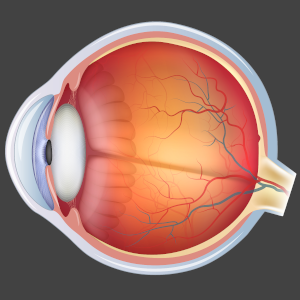
This advanced technology was however invented long before the advent of the television, computer and digital camera, namely with respect to the animal/human eye. The retina of a human eye contains approximately 6-7 million photosensors known as ‘cones’. Each individual cone responds to light in one of three areas of the spectrum (red/green/blue) and the signals from the three cones at each point combined as in a digital camera. Although it cannot be determined exactly, it is estimated that a human eye can probably distinguish up to about 10 million different colours. Whilst the eye may use fewer pixels overall than more advanced TV/computer screens, it is important to note that the cones in an eye are actually more concentrated towards the centre of vision, where the eye is going to be more focused at any given time. The eye additionally contains approximately 92 million of another type of photosensor know as ‘rods’. These basically detect differences between light and dark and are more important for vision at night and in low light conditions.
We have so far just talked about light detection, but the eye has other sophisticated functions, for example:
- The ability to rotate and look in different directions.
- The mechanism to open and close the aperture of the iris to accommodate different levels of brightness.
- The ability to change the shape of the lens to auto-focus on near or far objects.
- Three-dimensional vision. Each eye sees a slightly different image from the other, but the brain is programmed to combine the two images to create the impression of a single 3D image. Ever seen a 3D movie? If so you will appreciate what I mean.
Like many other things we see in biology, this is a totally amazing piece of engineering. Line it up against the Theory of Evolution, which says that everything happened by a series of random mutations (genetic changes) and that favourable changes have persisted through the survival of the fittest. For something as complex as an eye, it is going to take thousands of individual changes to perfect the design. Added to this, every change has got to pass the ‘survival of the fittest’ test, even though many of the changes are going to be of absolutely no benefit in themselves. Is such a notion really viable?
| Clear Evidence for God in Creation | The Atom | |